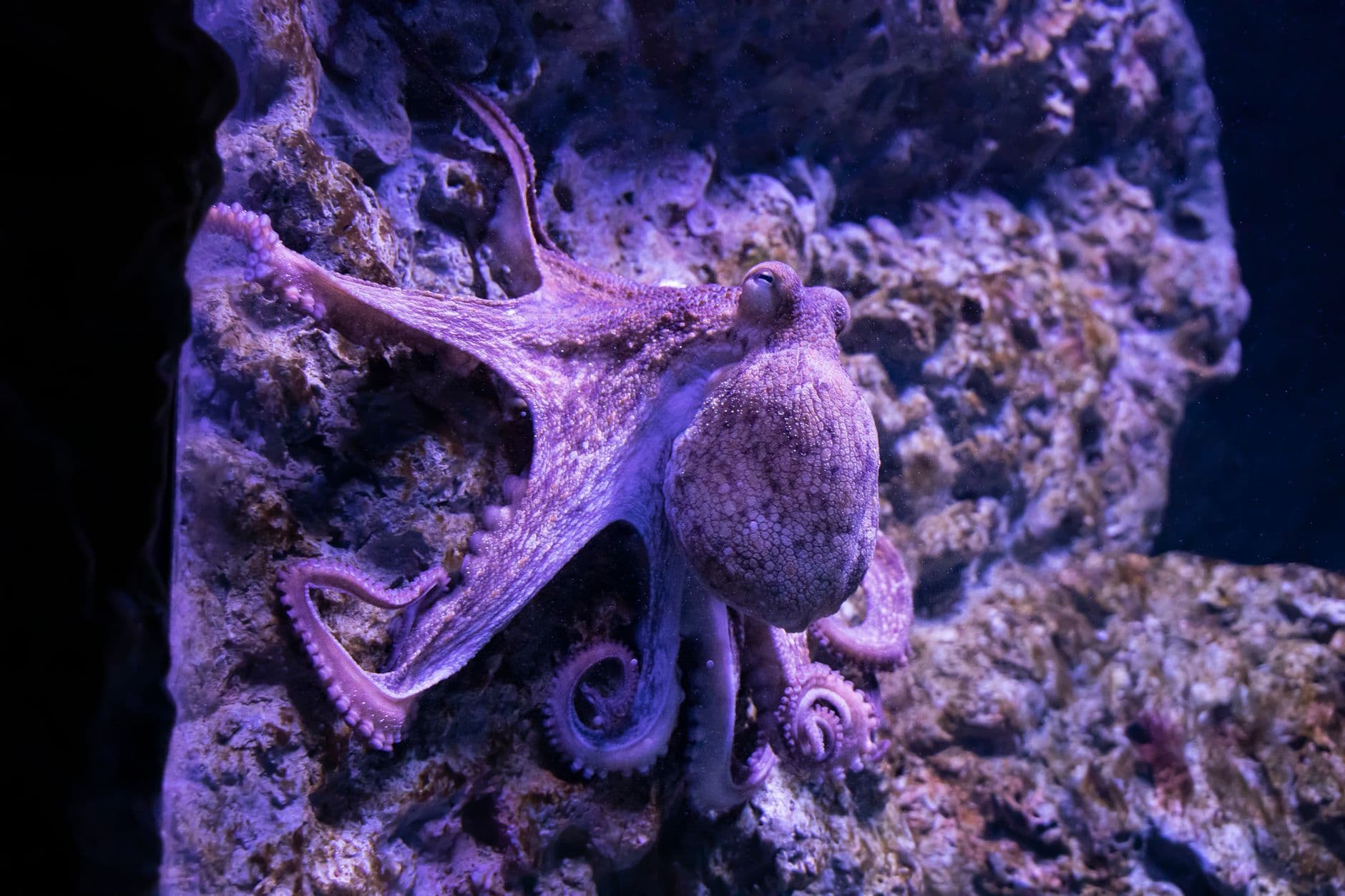
How Octopuses Edit Their Own DNA While You Sleep
Octopuses can rewrite their own genetic instructions without waiting for evolution to do the heavy lifting. While humans are stuck with the DNA we inherit, these eight-armed aliens of the ocean actively edit their genes in real time—sometimes within hours—to survive temperature changes and other environmental shocks.
This isn't science fiction. It's happening in tide pools and ocean depths right now, and it reveals something wild about how life actually works.
The RNA Editing Revolution in Marine Life
Here's where it gets strange: octopuses don't change their DNA itself. Instead, they edit RNA, the messenger molecule that tells cells what to do. RNA is like the working copy of DNA—temporary, flexible, and perfect for quick edits.
When an octopus moves from warm tropical waters to frigid depths, its cells don't panic and wait for natural selection. They actively swap out amino acids in key proteins, changing how those proteins function. A protein that worked fine in warm water gets rewritten to work in the cold.
Scientists have found that octopuses perform more RNA editing than almost any other animal. We're talking thousands of editing events happening simultaneously across their nervous system.
Cold Water Adaptation: Survival Without Waiting
The genius here is speed. Evolution normally works over generations. But octopuses need to adapt within their lifetime—sometimes within days when they encounter a new environment.
Their cephalopod biology relies on proteins called potassium channels that control nerve signals. In cold water, these channels need to work differently or the octopus's nervous system slugs to a crawl. Instead of hoping future generations have better genes, octopuses just edit the RNA instructions right now.
This creates proteins with different properties—more flexible, more responsive, better suited to the temperature. It's like an animal rewriting its own operating system while it's still running.
Researchers discovered this by studying how octopuses maintain intelligence across different ocean depths. The animal's neurons need to fire perfectly whether it's hunting in warm shallows or exploring the midnight zone. RNA editing keeps those electrical signals sharp.
Why This Changes Everything About DNA Modification
For decades, biologists treated DNA as the fixed blueprint—unchangeable except through mutation and natural selection. Octopuses demolished that assumption.
They're not alone. Squid do it. Some fish do it. Even humans perform limited RNA editing. But octopuses do it at an industrial scale, with some estimates suggesting up to 50 percent of their RNA gets edited.
This raises uncomfortable questions about what we thought we knew about genetic adaptation. If animals can rewire their proteins on demand, how much of evolution is actually about DNA changes versus smart molecular improvisation?
Recent studies suggest RNA editing might explain how octopuses develop complex behaviors and problem-solving skills. Their ability to edit genes gives them flexibility that locked-in genetic codes can't match.
The Bigger Picture: Genetic Adaptation Isn't One-Size-Fits-All
We've been taught that animals adapt through mutation, selection, and time. Octopuses are showing us there's a faster lane. They can test out genetic changes immediately without the evolutionary lottery.
This matters because it changes how we understand survival in changing oceans. As water temperatures shift from climate change, animals with RNA editing superpowers might adapt faster than we predicted. Octopuses could be future-proofing themselves in real time.
The ocean keeps surprising us. Just when we thought we understood how life evolves, an eight-armed genius casually edits its own genetic code and reminds us how much we still don't know.
Dive deeper into the strange world of marine biology and genetic adaptation. Explore more DNA discoveries that challenge everything we thought we knew about life. Or check out our latest nature stories updated daily. Want to explore more topics? Browse our full category collection or visit our blog for deep dives into nature's mysteries.