How Octopuses Edit Their Own DNA While You Sleep
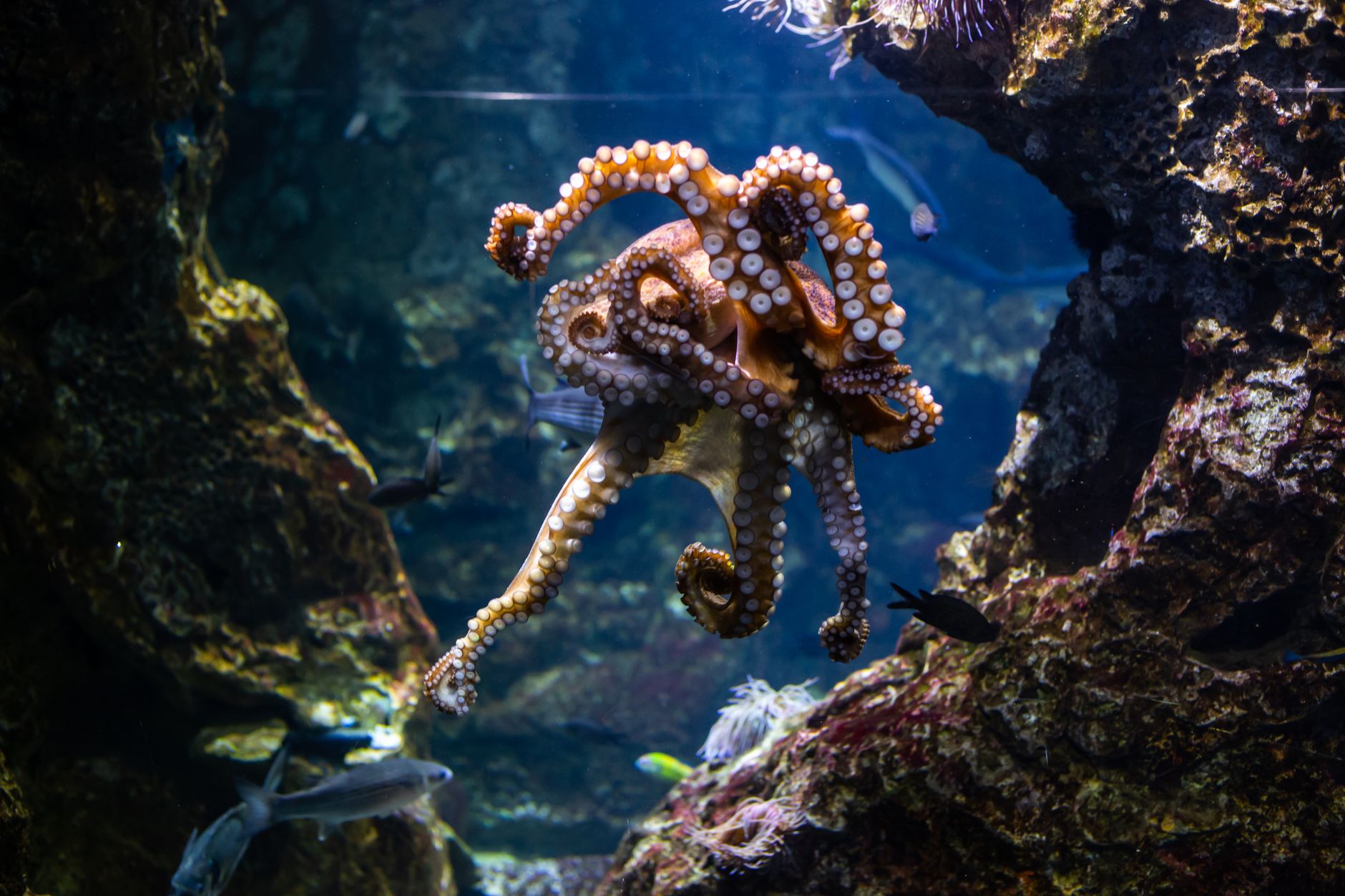
Octopuses can rewrite their own genetic code in real-time without altering their actual DNA. This isn't science fiction—it's happening right now in oceans across the planet, and it's one of nature's most mind-bending survival strategies.
Most animals are stuck with the genetic hand they're dealt at birth. Not octopuses. These eight-armed geniuses have cracked a biological loophole that lets them adapt instantly to crushing deep-sea pressure, freezing temperatures, and toxic environments.
RNA Editing: The Octopus Superpower
Here's where it gets wild. Octopuses don't edit their DNA directly. Instead, they edit RNA—the temporary messenger that carries genetic instructions from DNA to cells. Think of DNA as a master blueprint locked in a vault, and RNA as a photocopy that gets used once then discarded.
Octopuses have evolved enzymes that literally cut and paste pieces of RNA before cells read those instructions. A single gene can produce dozens of different proteins depending on how the RNA gets edited. One study found that nearly 60 percent of protein-coding genes in octopuses undergo this RNA editing process.
This is where the evolutionary magic happens. While other animals need generations to adapt, octopuses can change their protein recipes within hours or even minutes.
Cephalopod DNA Adaptation in Extreme Environments
The deep ocean is basically hell on Earth. Pressure crushes bones. Cold slows metabolism to a crawl. Darkness is absolute. Yet octopuses thrive where almost nothing else can survive.
Scientists discovered that when octopuses encounter temperature stress, they dramatically increase RNA editing of specific genes. These edited proteins help the octopus's nervous system function even when conditions would paralyze other creatures. It's like having a biological thermostat that adjusts your internal machinery on demand.
Squids and cuttlefish—octopuses' closest relatives—show similar editing patterns. This suggests that RNA editing became a core survival tool for the entire cephalopod family millions of years ago.
Genetic Flexibility: A Different Kind of Evolution
Traditional evolution works through random mutations that accumulate over generations. Natural selection favors the mutations that help organisms survive, and those traits spread through populations slowly.
Octopuses took a shortcut. By editing RNA on demand, they can test different protein variations within a single lifetime. This is evolution at warp speed—happening in days instead of centuries.
The trade-off? Octopuses actually have smaller genomes than many other animals. They've sacrificed genetic diversity for flexibility. Instead of carrying dozens of gene variants, they carry fewer genes but can modify them extensively through RNA editing.
A Nature journal study showed that octopuses living in warmer waters edit different genes than octopuses in cold waters—each population customizing its RNA editing strategy to local conditions.
Why This Rewrites Biology Textbooks
For decades, scientists taught that genes determined traits, full stop. Your DNA was your destiny. But octopuses proved that rule wrong.
They've demonstrated that organisms can maintain genetic stability while achieving massive phenotypic flexibility. In other words, you can have the same genes but radically different proteins doing wildly different jobs.
This discovery has ripple effects across biology. Researchers now study RNA editing in humans to understand diseases like epilepsy and depression. Some cancer cells even hijack RNA editing mechanisms to fuel their growth.
The octopus isn't just a fascinating creature—it's a biological rebel that rewrote the rulebook on what evolution can do. For more on how animals adapt to extreme environments, explore our DNA and biology section, or check out our daily nature updates for more discoveries that challenge conventional science.
Want to dive deeper into marine adaptation? Visit our full blog archive or browse our nature categories for articles on octopus intelligence, deep-sea survival, and evolutionary breakthroughs.
For more scientific context, check out National Geographic's coverage or Smithsonian Magazine's marine biology research.