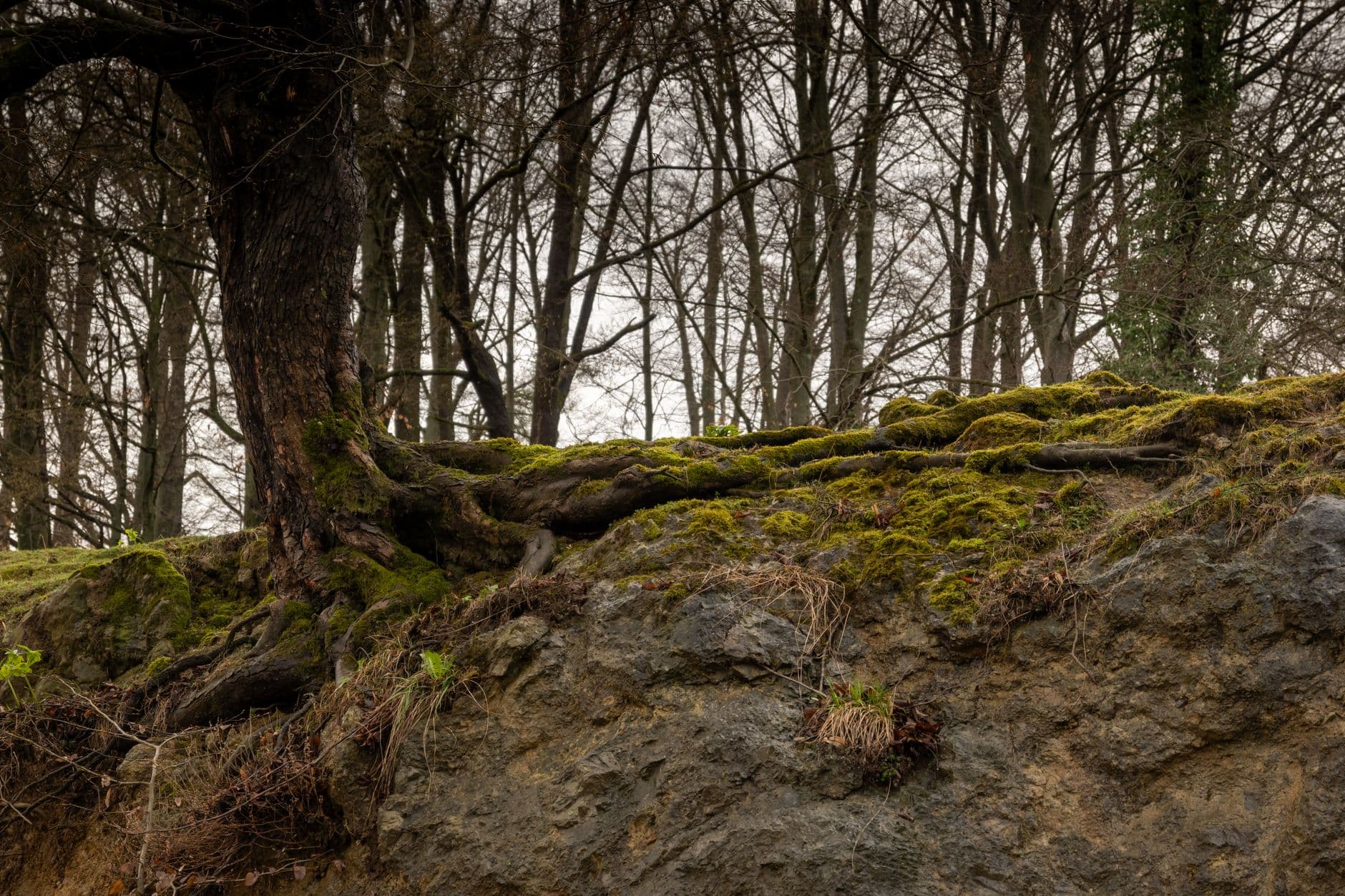
Why Trees Can Recognize Their Own Children: The Underground Truth
Trees can identify and preferentially support their own offspring through underground fungal networks, a phenomenon that sounds like science fiction but is backed by solid research. Scientists studying Douglas firs discovered that mother trees actively send carbon and nutrients to their genetic babies while limiting support to unrelated seedlings. This isn't some passive coincidence—it's intelligent parenting happening beneath the forest floor.
The implications are staggering. For decades, we treated forests as collections of individual trees competing for survival. We were wrong. Forests are actually interconnected superorganisms where parents nurture children and siblings support each other through a vast underground web.
The Fungal Network That Changes Everything
At the heart of this discovery lies something called the mycorrhizal network. Think of it as nature's internet—a system of fungal threads connecting tree roots underground like fiber optic cables connecting cities. These aren't parasites; they're mutualistic partners where fungi get sugar from trees and trees get phosphorus and nitrogen in return.
A single teaspoon of healthy forest soil contains more living organisms than there are people on Earth. These microscopic fungal threads extend for miles, linking hundreds or even thousands of trees into what researcher Suzanne Simard calls "the wood wide web."
The fungal strands are thin—thinner than human hair—yet incredibly efficient at moving nutrients. Carbon flows from mature trees to struggling youngsters. Potassium moves from trees with abundance to trees facing stress. It's resource redistribution on a scale that would impress any economist.
How Mother Trees Recognize Their Own Seedlings
The recognition mechanism remains partially mysterious, but research suggests trees use chemical signaling through the fungal network. Mother trees appear to detect the genetic signature of their offspring and adjust nutrient delivery accordingly. Nature journal studies have documented cases where mother trees invested up to 40 percent more carbon in their genetic offspring than in unrelated seedlings.
This happens even when the mother tree is dying. A mother tree nearing the end of its life will actually increase nutrient transfer to her offspring, essentially making one final investment in the next generation. She's literally transferring her legacy underground.
What's remarkable is the specificity. A mother tree surrounded by dozens of seedlings somehow distinguishes her own children from strangers. Smithsonian research suggests this communication might involve volatile organic compounds or specific chemical markers that travel through the fungal network.
The Science Behind Tree Family Bonds
Suzanne Simard's groundbreaking experiments in the 1990s provided the first concrete evidence of tree-to-tree communication. She used radioactive isotopes to track carbon movement between trees connected by mycorrhizal networks. The results showed older trees were sending more resources to younger trees during the growing season, then receiving carbohydrates back from younger trees in autumn.
More recent studies from BBC Nature have expanded this understanding. Researchers discovered that trees can even warn each other about insect attacks through the fungal network. When one tree is being eaten by aphids, it sends chemical signals that prepare neighboring trees to boost their own defenses.
The network also supports weak or sick trees. If a tree loses its canopy to fire or storm damage, neighboring healthy trees will increase nutrient flow through their shared fungal connections, essentially keeping the damaged tree on life support until it can recover.
This interconnectedness explains why clear-cutting forests causes such ecological damage beyond the obvious loss of trees. You're severing thousands of miles of fungal networks that took decades to establish.
Want to explore more incredible nature revelations? Check out our full collection of good to know facts or browse our daily nature feed for more stories that will reshape how you see the natural world. Visit our blog for deeper dives into nature's secrets.