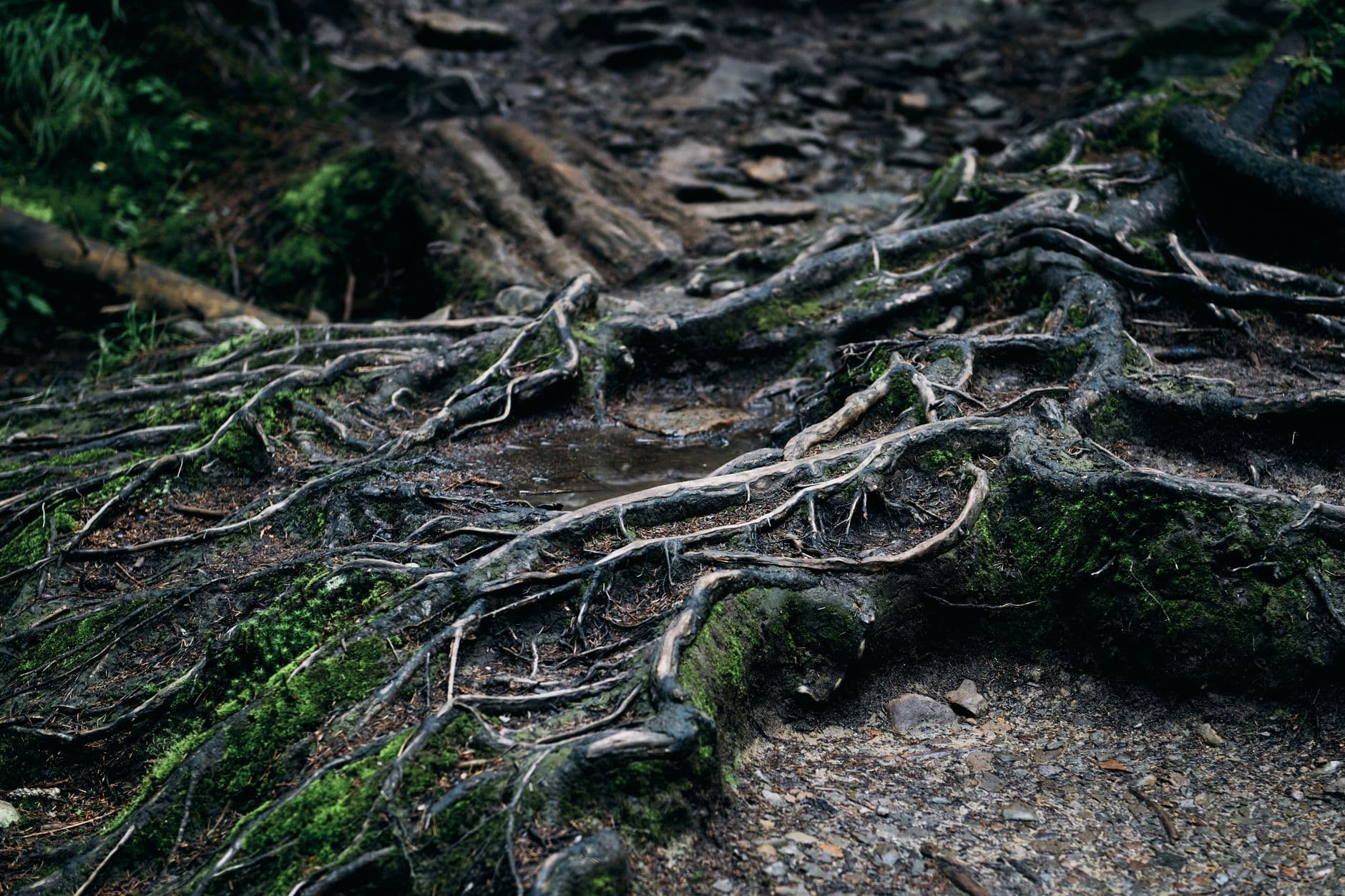
Trees Can Talk: The Hidden Network Under Your Feet
Trees are literally talking to each other right now, and we had no idea until recently. Beneath every forest floor runs an invisible superhighway where trees trade nutrients, warn each other of danger, and even support their weakest members—all through fungal connections most of us will never see.
This isn't science fiction. It's one of nature's most incredible secrets, and it changes everything we thought we knew about plants.
The Mycorrhizal Network: Nature's Underground Internet
Picture this: a Douglas fir tree sends carbon to a struggling hemlock through fungal threads thinner than human hair. The hemlock wasn't even producing enough sunlight to feed itself, yet somehow it survived—thanks to its neighbor.
Scientists call this the mycorrhizal network. It's a living internet made of fungi that connects tree roots together like neurons in a brain. When fungi wrap around roots, they create a partnership—the tree gives the fungus sugar from photosynthesis, and the fungus gives the tree water and nutrients it couldn't reach alone.
But here's where it gets wild: trees don't stop at simple nutrient trading. They actively manage this network, deciding who gets resources and who doesn't.
A mother tree recognizes her own seedlings and sends them preferential treatment—extra nutrients and carbon. She starves competing plants. This isn't accidental. This is strategy.
How Trees Send Distress Signals Through Fungal Connections
When a tree gets attacked by insects, it doesn't just suffer in silence. It sends chemical alarms through the fungal network to warn its neighbors, sometimes days before the insects even arrive at their doors.
Neighboring trees receiving these signals boost their own chemical defenses—thickening their leaves, producing toxins, and making themselves less appetizing targets. Research from National Geographic shows these warning systems work across species, even between trees that would normally compete.
It's like an early warning system for an entire forest. A single tree's problem becomes everyone's problem, and the forest responds collectively.
The network also transfers carbon from healthy trees to sick ones. During droughts or disease outbreaks, trees share resources to keep the forest alive. Older trees sometimes pump massive amounts of carbon into younger trees below their canopy, essentially nurturing the next generation.
What Science Is Still Discovering About Tree Intelligence
The research here is still young, but what we're learning challenges our basic assumptions about plant consciousness. Trees have memory. They recognize individual neighbors. They make decisions about resource allocation.
A study published in BBC Science found that trees even regulate their communication—they can increase or decrease fungal connections based on what's happening around them. Stressed trees send different signals than healthy trees. Mature trees communicate differently than saplings.
The fungal partners aren't passive conduits either. They're making decisions too. Some fungi favor certain trees over others. They've been doing this for 450 million years—far longer than trees have existed on land.
This ancient partnership shaped how forests work, how plants evolved, and possibly how intelligence itself develops in non-animal organisms.
Why This Matters for How We See Nature
Understanding the mycorrhizal network changes how we should manage forests. Clear-cutting doesn't just remove trees—it severs this communication system entirely. Young trees planted in isolation without these fungal connections struggle to survive and grow.
Sustainable forestry now considers preserving these networks as critical. Some scientists argue we should stop thinking of forests as collections of individual trees and start seeing them as single living superorganisms.
Nature reveals its deepest secrets to those patient enough to look beneath the surface. Explore more incredible nature facts that challenge how we understand the living world around us.
Want to discover more mind-bending truths about nature? Check out our daily nature discoveries or browse our full collection of nature stories that prove reality is stranger than any fiction.